Ocean noise pollution has doubled every decade. Discover how scientists aim to define ‘normal’ underwater noise to protect marine species and ecosystems.
The Sound Beneath The Surface
The deep ocean has limited light penetration. Sound, thus, becomes the primary way marine species perceive their environment, from the songs of whales to the clicking of shrimp. Unfortunately, with the increase in human underwater activities, noise levels have risen and have impacted marine organisms.
Due to shipping, industrial activities, and seismic exploration, sea noise pollution has doubled every decade since the 1950s. This pollution is not just a marine problem; it is an environmental issue that disrupts entire ecosystems. In France, since 1963, it has been recognized as a professional disease, and research estimated that over 3 million people are exposed to hazardous noise levels at work.
How can we define a ‘normal’ baseline for sea noise in 2025 for marine species conservation and regulation?
What is marine noise pollution?
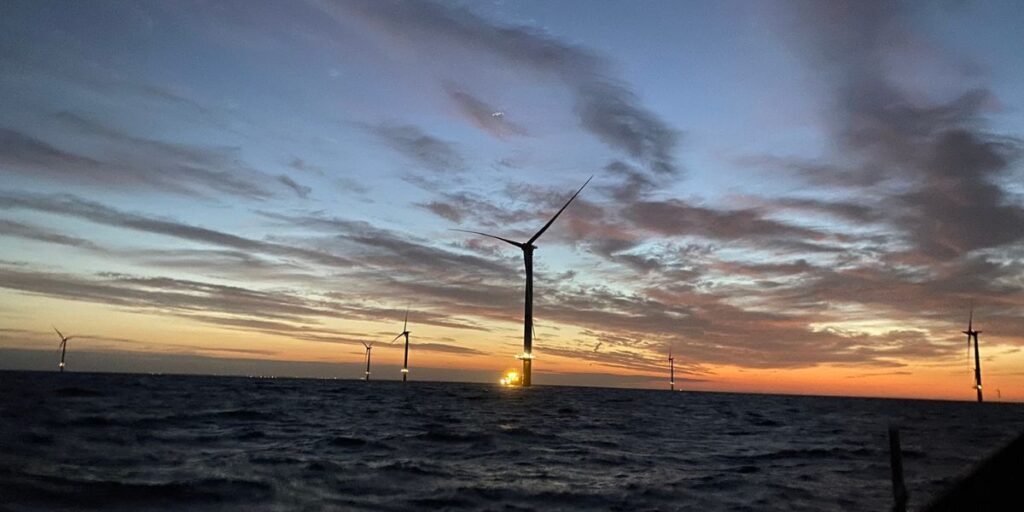
Underwater noise pollution is a form of environmental pollution caused by human activities that introduce excessive and artificial sound into the ocean. The biggest sources contributing to rising underwater noise levels are commercial shipping, oil exploration, seismic surveys, offshore wind turbine installation, and military sonar.
This type of pollution is especially harmful to marine mammals, as they rely on acoustic signals for communication, navigation, and survival. These sound sources, including every ship or vessel moving at high speed across the sea, emit noise at varying frequency levels that interfere with the acoustic range of many marine species.
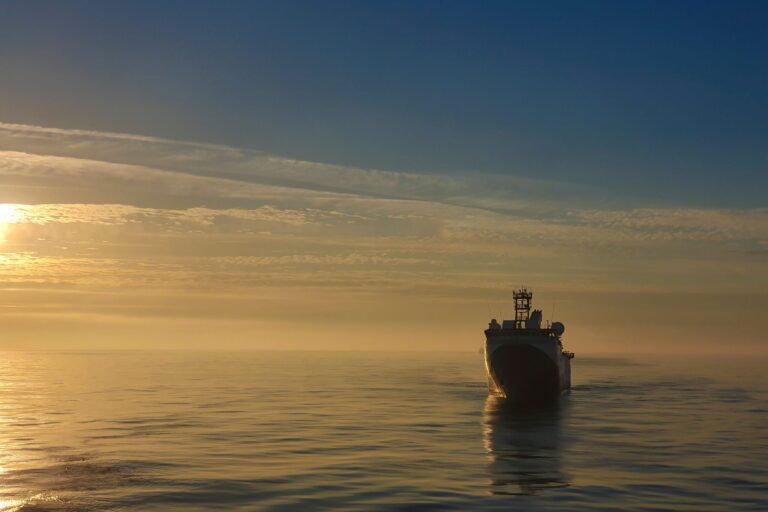
Imagine 250,000 ships navigating the global ocean at any moment, each vessel acting as a significant source of underwater noise. Cargo ships alone can generate sound levels up to 190 decibels, equivalent to a rock concert and far louder than a jet taking off.
The importance of baseline noise levels for conservation
A baseline for marine protection refers to the established reference point of natural or typical environmental conditions, such as sound levels, water quality, or biodiversity, against which changes or impacts can be measured. It helps assess the health of marine ecosystems and guide conservation efforts by providing a clear benchmark for monitoring and managing environmental shifts over time.
Why are baseline noise levels important for sea species conservation?
Establish Reference Points
Baseline noise levels serve as a reference for monitoring shifts in underwater acoustic conditions over time. Setting these reference points allows us to track the number and level of noise disturbances from marine sources like shipping, seismic activity, or offshore construction.
Differentiate Harmful Noise
These levels allow us to distinguish between harmful sound pollution and natural ocean acoustic signals, including whale calls or wave-generated sounds. For instance, measuring the peak frequency of noise from a vessel or ship helps identify disruptive sources that impact marine species.
Marine Protected Areas
In marine protected areas (MPAs), baseline noise data support effective environmental assessment and conservation management. Conservationists can compare the background level of sound to established acoustic baselines to evaluate whether noise from shipping or other human sources is affecting cetacean migration routes or breeding grounds in the ocean.
Measuring and Analyzing Underwater Acoustic Pollution
We live in a world that is constantly evolving with the advancement of various technologies, improving efficiency and innovation. However, this progress can also have negative effects, contributing to environmental damage if not managed sustainably. While advancements in technology have led to more precise and effective monitoring methods, numerous challenges still exist. As we look ahead, the future of underwater acoustics research promises exciting innovations to overcome these obstacles and improve ocean conservation.
Passive Acoustic Monitoring and real-time data collection
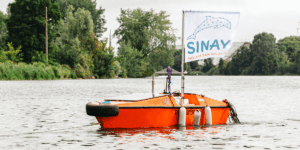
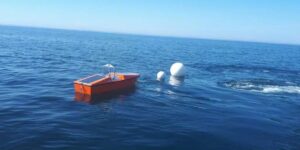
When marine species depend on sound for survival, increasing underwater noise disrupts their communication and migration across the ocean and sea. Passive Acoustic Monitoring (PAM) is a crucial tool for detecting and analyzing underwater acoustic signals in real time. The technology was first used during World War I to detect enemy military submarines. Using hydrophones, PAM continuously records the level of noise and frequency ranges in the kHz spectrum, helping researchers assess changes in marine soundscapes. It identifies the sound produced by each source of noise, both natural and anthropogenic, including shipping, vessel traffic, industrial activity, and seismic surveys.
Acoustic telemetry and hydrophone networks
Acoustic telemetry and hydrophone networks are tools used to monitor marine life and vessel activity through underwater sound detection. Acoustic telemetry involves tagging marine species with acoustic transmitters, while hydrophones record their signals and ambient sound from sources of noise such as ship engines and merchant vessels. These tools help track species distribution and assess the level of noise from each source of human activity in sensitive sea regions like the Baltic. Often summarized in figure and table formats, the data offers frequency-specific insights and supports long-term conservation assessment. Networks focusing on octave bands allow precise analysis of vessel-related acoustic impacts.
AI and machine learning in ocean noise analysis
Artificial intelligence (AI) in marine science began in the 1980s with simple navigation tools for underwater vehicles and expanded in the 2000s to include machine learning for species identification and ocean condition prediction. Today, AI and machine learning are vital for analyzing ocean acoustic data, detecting the source of noise underwater, and interpreting sound signals from marine species, ships, and environmental factors. These technologies can process vast datasets, identifying patterns in the kHz range emitted by shipping activity, vessel propulsion systems, and other sources of noise.
Key Concepts In Underwater Acoustics
Frequency
Decibels (dB)
Noise Pollution
Frameworks and Directives Guiding Marine Noise Research
Various frameworks, directives, and international policies have been established to address anthropogenic underwater noise by guiding research, monitoring, and regulating efforts.
EU Marine Strategy Framework Directive (MSFD)
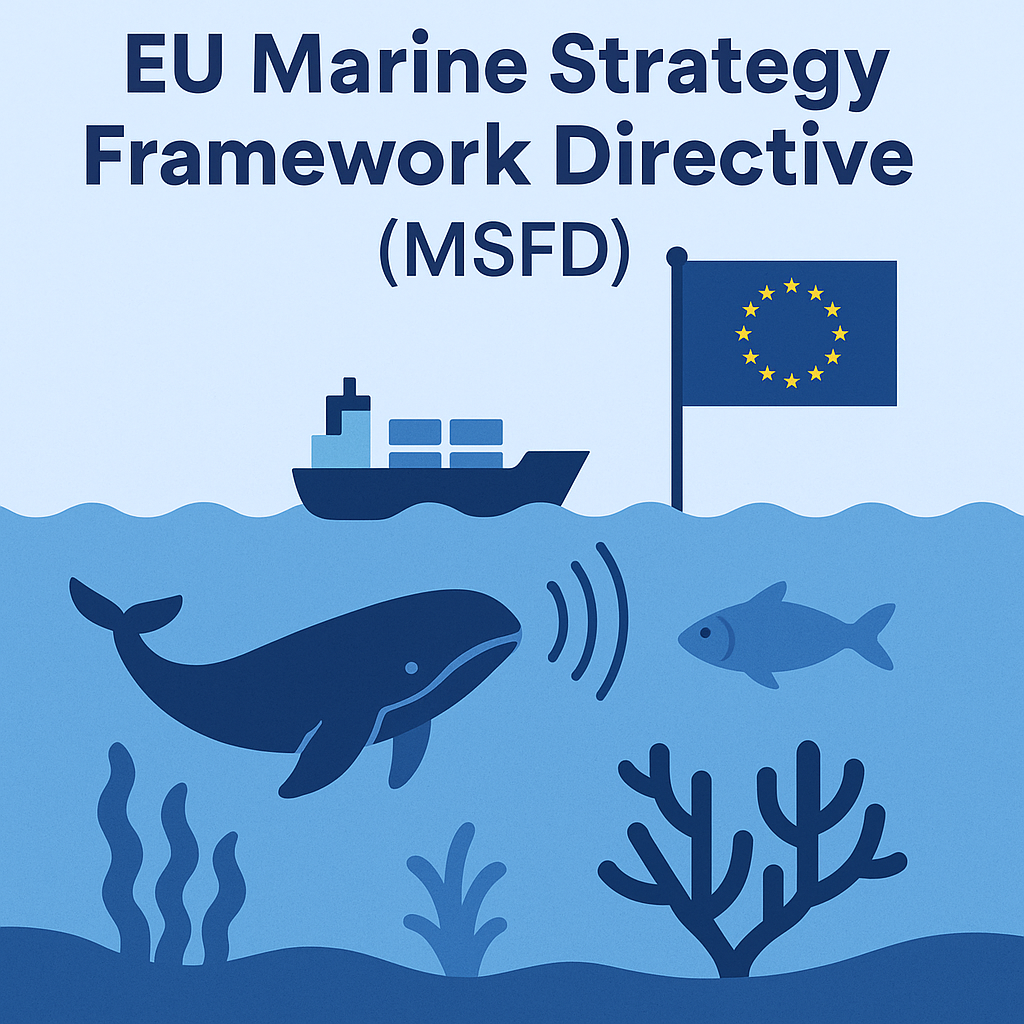
The EU Marine Strategy Framework Directive (MSFD) guides marine noise research by requiring member states to assess and achieve Good Environmental Status (GES) of their marine waters. This includes monitoring underwater sound level, identifying noise sources such as vessel traffic, and assessing their impact on marine life through spatial and temporal distribution assessments.
The MSFD encourages national efforts to be aligned with broader international collaborations, such as those in the Baltic Sea region, where coordinated monitoring of octave band frequency data and data sharing tables are essential.
The Future of Noise Baselines and Sustainable Solutions
Future considerations for defining baseline noise levels
Quieter Ship Designs and Noise Reduction Technologies
The Problem
Disorient Dolphins
Interfere With Fish Behavior
Impact Ecosystem Balance
The Solution
Alternative Shipping Routes
Continous Noise Assessment
Public Awareness Campaigns
Help us establish proper baselines for ocean noise and protect marine life for future generations.