From Propeller Cavitation to Hull Form: Engineering Choices that Impact Underwater Noise

Propeller & hull solutions

At the intersection of marine engineering and environmental conservation, we explore how propeller cavitation and hull design impact underwater noise pollution.

Underwater noise from commercial vessels can reach up to 190 decibels—louder than a jet engine at take-off—disrupting marine ecosystems across vast ocean areas.

Understanding propreller cavitation

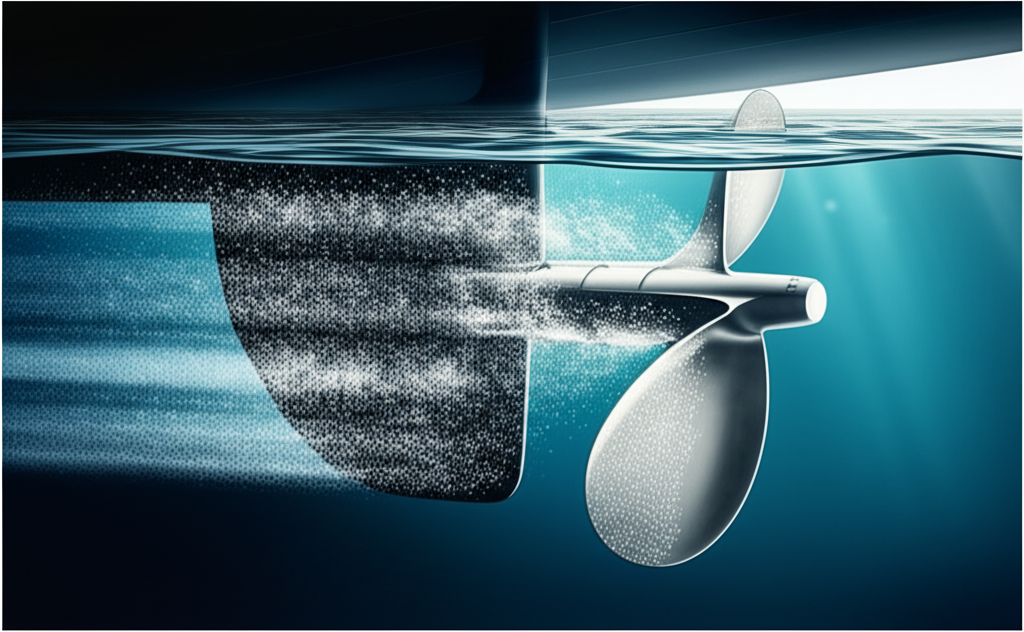
Propeller cavitation occurs when a ship’s propeller spins rapidly, creating areas of low pressure that form vapor bubbles. These bubbles collapse violently, producing strong shockwaves and loud underwater noise that can travel up to 100 miles.
 

Bubble Formation

Low pressure areas create vapor bubbles on the forward side of propeller blades.
 

Violent Collapse

Bubbles collapse in higher-pressure zones, creating powerful shockwaves.
 

Acoustic Impact

Generates up to 180dB of underwater noise, disrupting marine life communication.
propreller cavitation

Hull design & noise generation

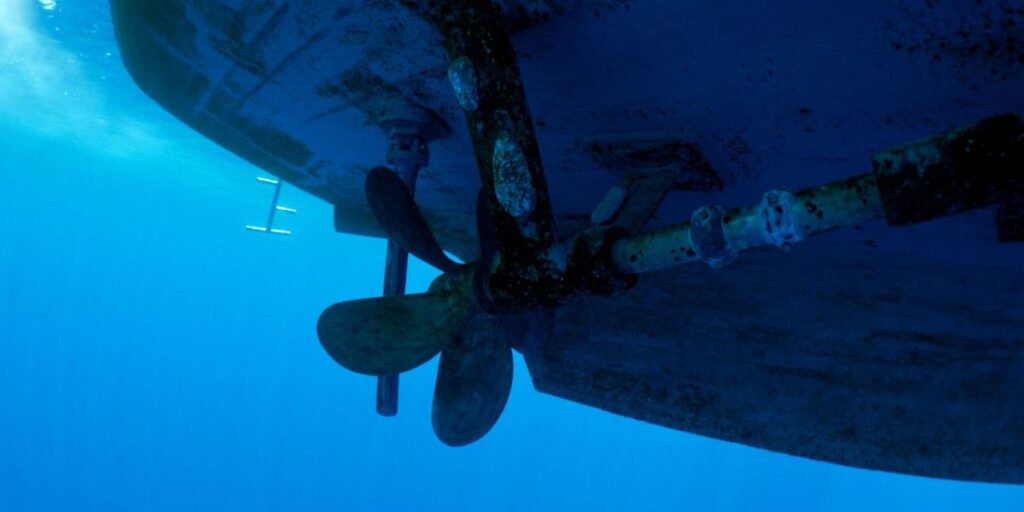
A ship’s hull form determines how water flows around the vessel, influencing the volume and frequency of underwater noise generated.

Hydrodynamic Flow

Poorly optimized hull geometry creates excessive turbulence and flow separation, increasing underwater noise.

Turbulent Flow

Turbulence results in broadband noise spanning a wide range of frequencies that disrupt marine life.

Acoustic Emissions

Higher vessel speeds amplify flow instability and increase underwater acoustic emissions.

Engineering Solutions to Reduce Noise

Innovative engineering techniques in propeller and hull design can significantly reduce underwater noise pollution while maintaining vessel efficiency.

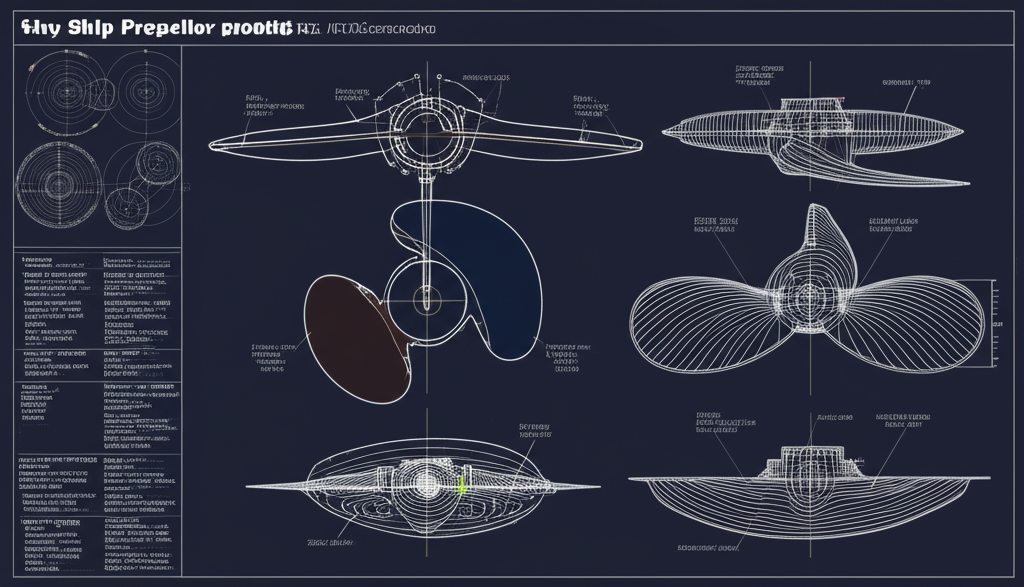
Blade Shape Optimization

Carefully designed propeller blades minimize pressure differences, reducing vapor bubble formation

Tip Modifications

Adding tip rake or winglets controls vortex creation at blade edges, reducing localized cavitation

Blade Skewing

Curving blades backward spreads load more gradually during rotation, preventing sudden pressure drops

Streamlined Hull Shapes

Optimized hull designs reduce turbulence and lower the noise signal transmitted through water

Specialized Coatings

Anechoic or polyurethane layers dampen vibrations and absorb sound energy

Environmental Impact of Underwater Noise

Beyond the depths of 200 meters where light is limited, the ocean is essentially an acoustic world. Marine species depend on sound for vital functions.
Disruption of Marine Communication

Anthropogenic noise can severely disrupt the communication, navigation, and behavior of ocean species, from zooplanktons to blue whales.
Marine mammals rely on low-frequency sounds to communicate and navigate across oceans. Noise pollution masks these vital signals.”

Long-term Ecological Consequences

Noise pollution alters migration patterns and can lead to long-term population declines, impacting both marine ecosystems and the broader environmental balance.
“For marine mammals, certain noise frequencies overlap with their vocalization ranges, increasing stress and disorientation

International Guidelines & Regulations

Recognizing the environmental impact of underwater noise from ships, international bodies have developed frameworks to mitigate shipping-related acoustic pollution.
 

1980s

IMO begins addressing underwater noise concerns
 

2004

EU’s Marine Strategy Framework Directive requires member states to manage human-induced marine noise
 

2004

IMO’s Marine Environment Protection Committee highlights harmful effects of underwater noise
 

Present

Various regions developing frameworks to mitigate shipping-related acoustic pollution

Case Studies in Noise Mitigation

North Atlantic Research Vessel - 158dB Reduction

A research vessel operating in the noise-sensitive North Atlantic underwent comprehensive modifications to reduce its acoustic footprint:
 
  • Structural modifications to engine mounts reduced vibration transfer to the hull
  • Application of specialized noise-dampening coatings to 85% of the hull surface
  • Propeller redesign with optimized blade skewing and tip modifications
Post-implementation measurements confirmed an 18dB reduction in underwater radiated noise, with the most significant improvements in the 10-100Hz range critical for marine mammal communication.
“The noise reduction exceeded our expectations and has allowed us to conduct research with minimal disruption to marine life.” — Project Lead Engineer

Baltic Sea Ferry Retrofit - 12dB Reduction

A passenger ferry operating in the ecologically sensitive Baltic Sea underwent a retrofit focused on noise reduction:
 
  • Installation of low-noise propellers with optimized blade design
  • Application of vibration-dampening coatings to critical hull sections
  • Implementation of operational speed guidelines in sensitive areas
 
Hydrophone arrays verified a 12dB reduction in acoustic output during operations. The retrofit not only reduced environmental impact but also improved fuel efficiency by 7%, creating a compelling business case for noise reduction.
“This project demonstrated that environmental improvements can align with operational efficiency.” — Baltic Maritime Authority

Sinay's Innovative Acoustic Solutions

In addition to supporting regulatory frameworks against underwater noise, Sinay delivers innovative solutions for maritime stakeholders.

AI-Powered PAM System

Detects marine mammals and tracks underwater sound levels to reduce human impact

Real-Time Monitoring

24/7 monitoring with immediate alerts for noise threshold violations

Cloud-Based Analysis

Advanced data processing turns ocean noise into actionable insights.
 
Who Benefits From Noise Reduction Solutions
  • Industrial Operators Looking To Minimize Ecological Impact
  • Research Institutions Studying Marine Biodiversity
  • Conservation Agencies Monitoring Protected Species
  • Port Authorities Managing Underwater Noise
  • Government Bodies Enforcing Environmental Regulations

PROTECTING OUR OCEANS

From propeller cavitation to vessel design, mitigating underwater noise pollution requires innovative engineering solutions to reduce sound emissions while enabling ships to operate efficiently.

With ongoing innovation in hardware and software, we continue to shape the future of sustainable ocean operations, biodiversity research, and environmental policy.
 
“The sounds of the ocean tell us more about marine life and health than our eyes ever could.”

FAQ

Still have questions?

Contact us! We’ll be happy to help you.

Contact us

Ship noise can travel remarkable distances underwater—up to 100 miles or more in ideal conditions. Sound travels nearly four times faster in water than in air, and low-frequency sounds from large vessels can propagate across entire ocean basins under certain conditions.

When properly implemented, noise reduction technologies often improve vessel performance. Optimized propeller designs and hull forms that reduce noise typically also reduce fuel consumption by improving hydrodynamic efficiency. The initial investment in noise reduction technology can result in operational cost savings over time.

Currently, most underwater noise regulations are voluntary guidelines rather than mandatory requirements. However, this is changing rapidly. The EU’s Marine Strategy Framework Directive requires member states to address underwater noise, and several countries are developing mandatory standards. The IMO continues to work on international guidelines that may become mandatory in the future.

Implementation costs vary widely depending on vessel type, size, and the specific technologies adopted. For new builds, incorporating noise reduction from the design phase typically adds 3-8% to construction costs. Retrofitting existing vessels is more expensive, with costs ranging from $500,000 for basic modifications to several million dollars for comprehensive solutions on large vessels.

Marine mammals, particularly whales and dolphins, are most severely affected due to their reliance on sound for communication, navigation, and finding food. However, research shows that fish, invertebrates, and even zooplankton are impacted by anthropogenic noise. Species that communicate in the same frequency ranges as vessel noise (typically 5-400 Hz) experience the greatest disruption.

Underwater noise is measured using hydrophones—specialized underwater microphones that detect acoustic pressure. Modern monitoring systems use arrays of hydrophones connected to data processing systems that analyze sound levels, frequencies, and sources. Advanced systems like Sinay’s PAM platform use AI to identify specific noise sources and marine species in real-time.


You may also like: