
Remote electronic monitoring
One team to design & deliver your REM programme
The expensive decisions in REM are locked in at design. Sinay runs design
through delivery, so your programme survives vessel 100 and audit day
• The challenge
Every REM programme is a balancing game
Science, compliance, and cost are in constant tension.
Pull too hard on cost
and the data fails audit.
Pull too hard on compliance
and the science isn’t usable.
Pull too hard on science
and the programme runs out of budget.
• our customers
Trusted by


• The solution
Sinay owns the balance across REM
Most programmes fragment the work across vendors and lose the balance between handoffs.
Sinay runs every stage as one operation, so the trade-offs you set at design hold at scale.
Co-design
Deploy
Review
Deliver
• How it works
All phases, one accountable team
PHASE 1
Co-design
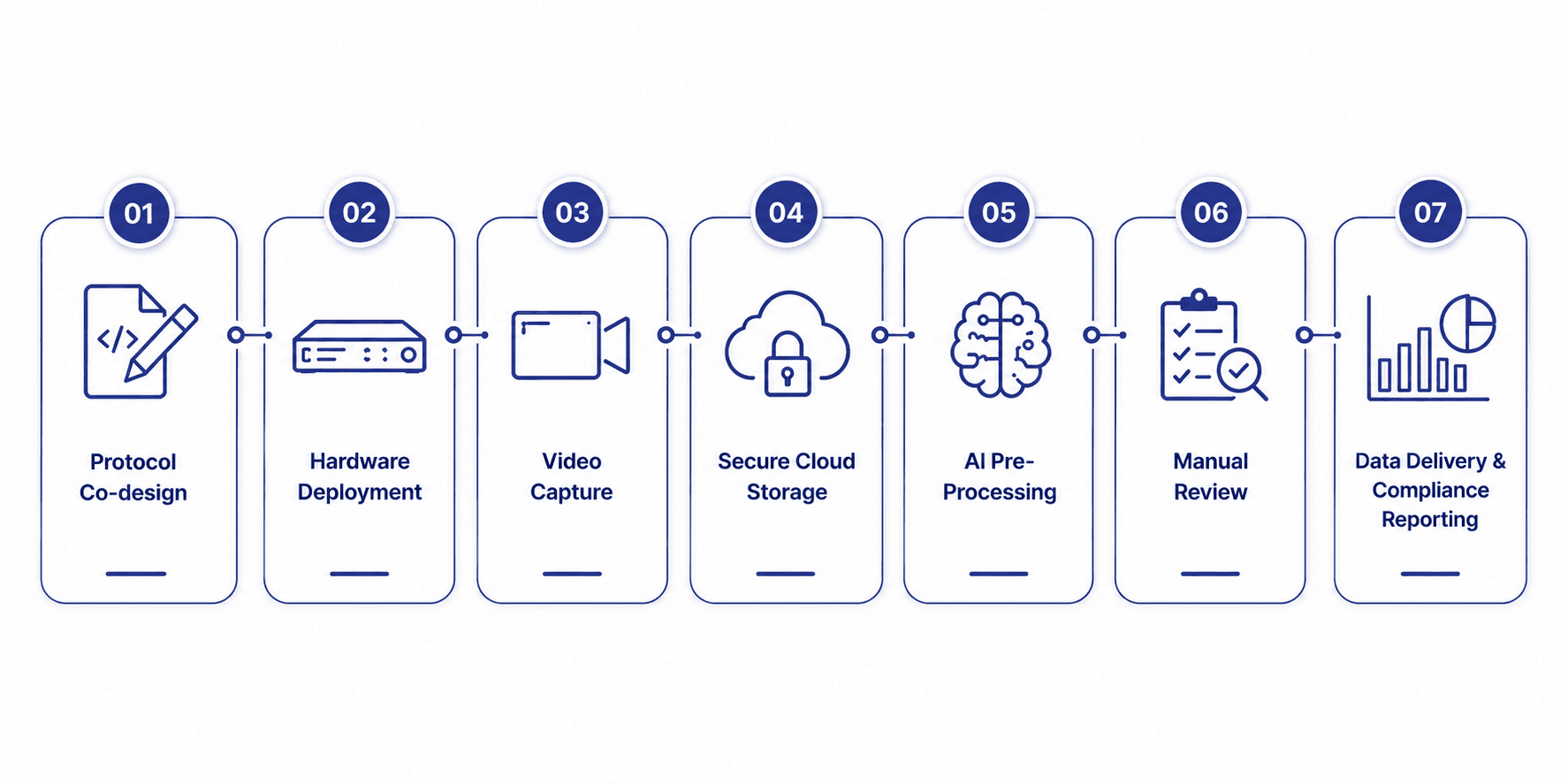
Sinay sits down with your scientific partners and your regulator to decide what gets monitored, how it will be validated, and what the hardware has to do to deliver it. The trade-offs between science, compliance, and cost are made here, on purpose, before any hardware is ordered.
INCLUDES
- Programme objectives
- Hardware specifications
- Sampling & review strategy
- Data governance
PHASE 2
Deploy
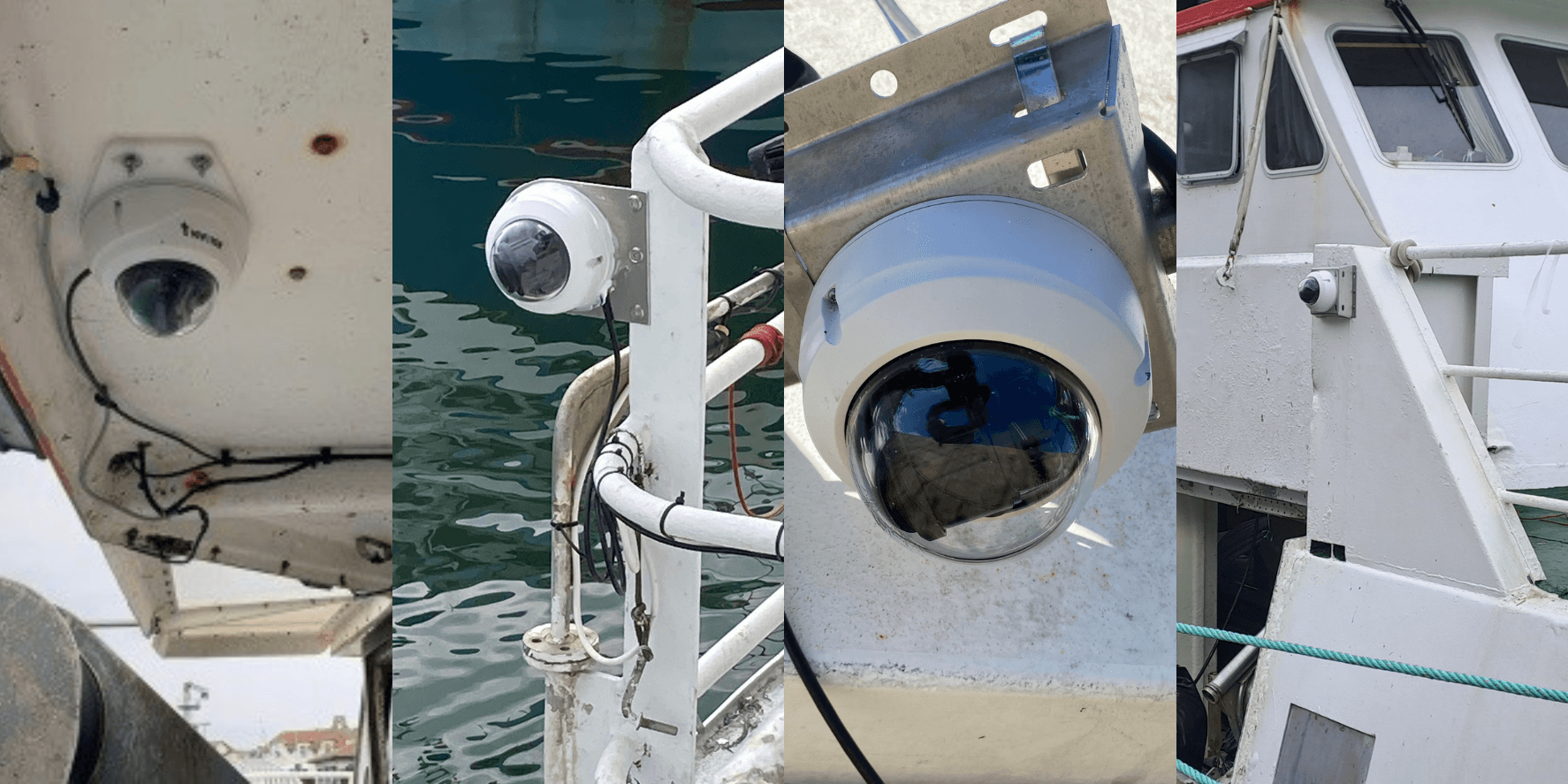
We run a qualification visit on every vessel, define camera positioning, and handle remote fine-tuning after install. Local certified electricians do the physical work. Data leaves the vessel by 4G, Starlink, or hard disk depending on the fleet, then gets quality-checked and stored in EU-hosted cloud.
INCLUDES
- Video capture and transmission
- Hardware deployment
- Secure cloud storage
PHASE 3
Review
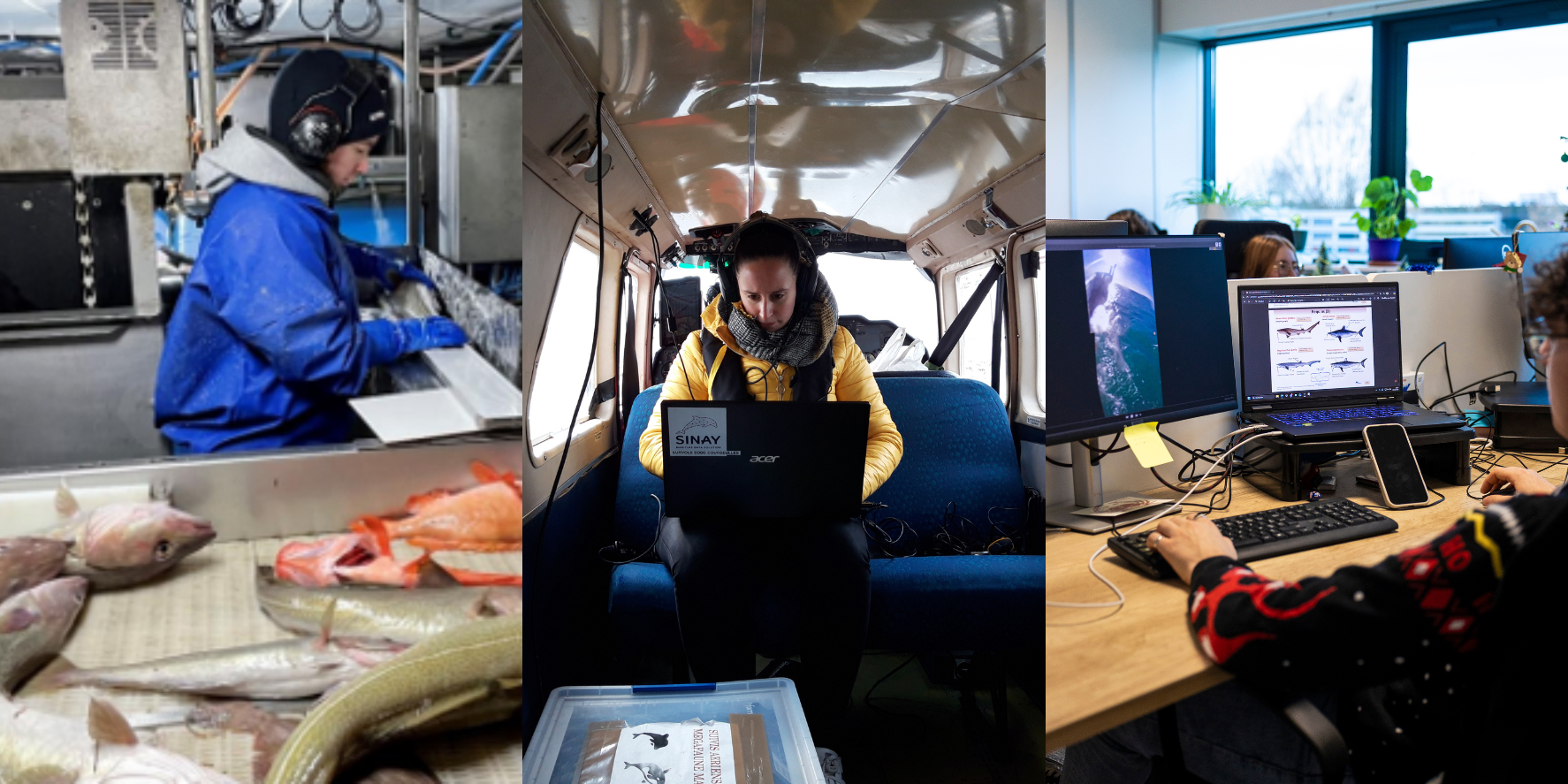
AI pre-processing runs first. Programme-specific models, trained on annotated fisheries data rather than generic detectors, flag the moments worth reviewing. Face blurring runs live for GDPR. Then 30+ Ifremer-certified reviewers watch flagged events at 6× speed and species specialists cross-validate.
INCLUDES
- AI pre-processing
- Manual review
PHASE 4
Deliver
The dataset turns into different outputs for different stakeholders. Scientists get an anonymised database with annotated bycatch events. Regulators receive the compliance report, authored by Sinay and submitted to the authority. Fishermen see only their own vessel. Every output is configured per objective at protocol design.
INCLUDES
- Data delivery
- Compliance reporting
• What our customers say
Hear from our customers
“Sinay enabled us to operationalize fisheries monitoring across a large fleet, with data we could use directly for compliance and scientific analysis.”
National Fisheries Monitoring Program
“As a small business owner with limited web design experience, Element UI has been a game-changer for me. I was able to build my website in record time without compromising on quality.”

Full name
Position
“Starting with Element UI was like finding a mentor. The pre-built layouts taught me about structure, spacing, and responsive design as I built. It’s more than a tool; it’s a learning experience that has rapidly advanced my Elementor skills.”
Full name
Position
• Secure & Compliant by Design
Operating under OFB, Cefas, DGAMPA, and Ifremer governance
ISO 9001
ISO 14001
ISO 45001
GDPR Compliant
• Secure & Compliant by Design
National-scale REM, running since 2020
OBSCAMe
Client: OFB · France · Since 2020
120+ vessels · Atlantic · Gillnet and pelagic trawl
National-scale 100% review for marine mammals, elasmobranchs, seabirds, turtles, and amphidromous species. Multi-year baseline dataset.
CEFAS
Client: Cefas · United Kingdom · Since 2025
20 vessels · Cornwall and Scotland · Gillnetters and trawlers
Marine mammal and seabird monitoring under UK regulatory conditions, including the Clean Catch Peterhead extension on warp-cable collisions, codend diving, and tori-line testing.
Why Sinay?
Fisheries Pedigree
Certified Human Review
Fisheries-specific AI
Design Before Hardware
days at sea
hours reviewed
vessel days
Ifremer certified reviewers
The only REM partner you’ll need
Avoid the REM programme mistakes that cost millions to fix.
Frequently asked questions
We’re here to help with all your questions and answers in one place. Can’t find what you’re looking for? Reach out to our support team directly.
How does Sinay align with the 2028 REM mandate?
Article 25a of Regulation (EU) 2023/2842 makes REM mandatory on vessels over 18 metres at high risk of non-compliance with the landing obligation. Sinay’s programmes already operate to the EFCA Technical Guidelines (March 2025), the harmonised standard Member States are expected to follow. A new programme designed with Sinay is built to satisfy the regulation from day one.
Do you supply the hardware?
Sinay specifies the hardware as part of protocol co-design and assembles the install with partners. Cameras and sensors come from established manufacturers, local certified electricians do the physical work, and Sinay handles qualification visits and remote fine-tuning. The buyer does not run a separate hardware procurement.
We already have cameras installed on some vessels. Can Sinay work with our hardware?
Yes. The AI pipeline and review operation are platform-agnostic, and a qualification visit determines whether existing hardware can deliver what the protocol requires. Where it cannot, Sinay specifies what needs to change rather than insisting on full replacement.
Who owns the data, and where is it stored?
The buyer owns the data. Default hosting is EU-based and GDPR-compliant. Customer-hosted or on-premise options are available where required. Export formats are open, so there is no proprietary lock-in at contract end.
Can Sinay support a programme outside France and the UK?
Yes. The AI pipeline, reviewer team, cloud infrastructure, and compliance reporting are geography-agnostic. Vessel-level work requires a local partner network, which Sinay builds out for each new geography during the early phase.
How long does it take to stand up a new programme?
Protocol co-design takes one to three months depending on complexity. A pilot deployment on five to ten vessels runs three to six months and validates the data and cost model before scaling. Full rollout depends on fleet size, geography, and install partner availability.