You have probably heard about underwater noise in the maritime industry that is generated by commercial shipping, offshore constructions, and mining activities…
As most marine species rely on noise to communicate and survive, underwater noise credits have become strategic systems to protect sensitive marine species from noise pollution effects.
Are underwater noise credits the future of maritime pollution control?
Why Underwater Noise Matters
- Anthropogenic noise travels long distances, disrupting essential behaviors like communication, mating, migration, and hunting
- Marine species such as whales, dolphins, and fish depend on acoustic cues to navigate, find food, and avoid predators
- With rising concern, underwater noise credits are emerging as a potential solution to regulate and reduce ocean sound pollution
Understanding Underwater Noise Credits and Their Impact on Marine Ecosystems
What Are Underwater Noise Credits?
- Purchased through regulators or credit systems
- Companies that emit less noise can sell their surplus credits
- Encourages investment in quieter technologies and operations
- Based on data from hydrophones and blue tech systems
How Sound Affects Marine Species
- Whales and dolphins use echolocation to communicate and hunt
- Fish like cod or herring use sound for spawning and predator detection
- Invertebrates (e.g., squid, shrimp) suffer sensory damage from vibrations
- Sea turtles rely on sound cues for navigation and feeding
- Affected habitats include mangroves, seagrasses, and salt marshes — vital for blue carbon capture
Carbon vs. Acoustic Credits
Carbon Credits
Frequency-based detection systems
Challenges and Market Potential
- Blue tech like hydrophones and AI enable real-time monitoring
- Difficulties in standardizing measurement and verification (MRV)
- No formal pollution permit system for underwater noise
- Could become a key tool in ocean-based ESG strategies
Technologies Powering Acoustic Offsets
As underwater noise pollution becomes a recognized environmental challenge, new technologies are emerging to help monitor, map, and reduce the acoustic impact of maritime activities. These innovations form the foundation of underwater noise offset systems by enabling accurate data collection, real-time analysis, and sound mitigation strategies.
Passive Acoustic Monitoring (PAM)
- Identify marine mammal vocalizations and vessel noise
- Enable long-term ecological monitoring and impact assessment
- Support regulatory compliance and biodiversity protection
Real-Time Ocean Noise Mapping
- Help protect sensitive habitats by enabling proactive decision-making
- Produces live “noise maps” to adjust maritime operations on the fly
- Monitor shipping activity, offshore construction, and animal presence
- Generate live “noise maps” to inform maritime operations
Ship Design Innovations
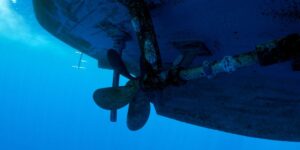
- Air Lubrication Systems: Inject air bubbles beneath the hull to reduce drag and acoustic footprint
- Low-noise gears/engine mounts: Minimize mechanical vibrations from engines and propellers
- Onboard monitoring: Measure and manage noise emissions in real time during operations
- Distributed Acoustic Sensing (DAS): Use fiber-optic cables to detect acoustic signals over large areas without harming marine life
Aligning with Climate and ESG Strategies
Complement blue carbon initiatives like seagrass restoration
Support for environmental compliance and corporate responsibility
Synergy with carbon markets
Enhancing biodiversity and ocean resilience
Sinay's Role in Ocean Sound Monitoring
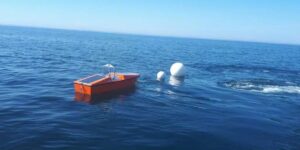
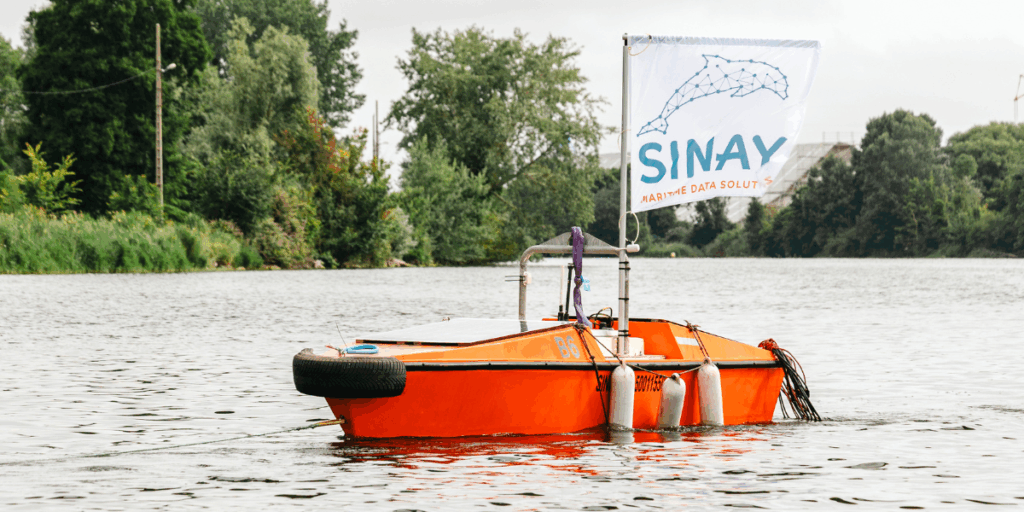
- PAM buoys operate 24/7, with broadband hydrophones for full-frequency detection
- Data streamed to a cloud platform and analyzed with AI
- Dashboards offer alerts, noise mapping, and compliance tracking
- Tailored for all project phases: baseline, construction, operation
A New Path for Ocean Sustainability
Why Acoustic Offsets Matter for the Future:
Represent a new frontier in ocean sustainability and conservation
Incentivize innovation in quieter vessel and port technologies
Support marine species recovery by reducing harmful sound levels
Align with ESG goals and global climate strategies
Potential to evolve into a regulated, tradable environmental asset
What’s Needed for Global Adoption:
- Standardized URN measurement and acoustic MRV protocols
- Regulatory frameworks to define credit issuance and trading
- Transparent, science-based validation methods
- Strong support from maritime industry and international bodies
FAQ
Ship noise can travel remarkable distances underwater—up to 100 miles or more in ideal conditions. Sound travels nearly four times faster in water than in air, and low-frequency sounds from large vessels can propagate across entire ocean basins under certain conditions.
When properly implemented, noise reduction technologies often improve vessel performance. Optimized propeller designs and hull forms that reduce noise typically also reduce fuel consumption by improving hydrodynamic efficiency. The initial investment in noise reduction technology can result in operational cost savings over time.
Currently, most underwater noise regulations are voluntary guidelines rather than mandatory requirements. However, this is changing rapidly. The EU’s Marine Strategy Framework Directive requires member states to address underwater noise, and several countries are developing mandatory standards. The IMO continues to work on international guidelines that may become mandatory in the future.
Implementation costs vary widely depending on vessel type, size, and the specific technologies adopted. For new builds, incorporating noise reduction from the design phase typically adds 3-8% to construction costs. Retrofitting existing vessels is more expensive, with costs ranging from $500,000 for basic modifications to several million dollars for comprehensive solutions on large vessels.
Marine mammals, particularly whales and dolphins, are most severely affected due to their reliance on sound for communication, navigation, and finding food. However, research shows that fish, invertebrates, and even zooplankton are impacted by anthropogenic noise. Species that communicate in the same frequency ranges as vessel noise (typically 5-400 Hz) experience the greatest disruption.
Underwater noise is measured using hydrophones—specialized underwater microphones that detect acoustic pressure. Modern monitoring systems use arrays of hydrophones connected to data processing systems that analyze sound levels, frequencies, and sources. Advanced systems like Sinay’s PAM platform use AI to identify specific noise sources and marine species in real-time.