
Updated on 22/04/2026
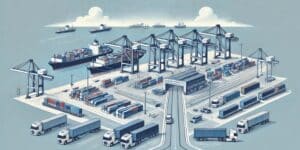
What are port operations? Understanding them starts with a closer look at how ports run day-to-day and at the role port authorities play in keeping maritime trade moving.
What Are Port Operations?
Port operations cover the full set of maritime procedures that move vessels, cargo, and passengers through a terminal from arrival to departure. Sea travel can be undertaken through many different means, and each type of vessel comes with its own specifications. From container ships to ferries, barges to recreational boats, nearly every watercraft depends on port operations to start or finish its journey safely.
How a port actually runs depends on several factors: its geographical location, the layout of its terminals, channel depth, and ease of navigation. Ports are also subjected to state and local regulations issued by port authorities on top of these operational realities. To better understand port operations, it helps to first look at why port authorities exist in the first place.
What is the Meaning of ETA, ETD, ATD, & ATA in Shipping ?
Companies and people around the globe rely on precise predictions of when a vessel will arrive with a shipment of goods and services. In shipping, ETA means…
What Is The Function Of Port Authorities?
The functions
Port authorities have three core functions: regulatory, commercial, and community-focused.
How port operations are carried out directly affects the safety, security, environmental compliance, and overall success of any shipment recreational or commercial. For this reason, the role of port authorities comes with great responsibilities. Every port and terminal is different, but in most cases port authorities oversee:
- The maritime logistics behind receiving, handling, and safely storing cargo moving through the supply chain
- Navigational assistance to all marine vessels approaching the port, such as ETA for shipping vessels
- Licensing and regulation of the services provided within the port
Port authorities also oversee marine environmental monitoring and management (including protection of local ecosystems), financial matters, and liability for damages.
Beyond that, they play an active role in driving economic development and social responsibility in their regions. They work closely with stakeholders, cargo owners, shipping lines, local businesses, and public institutions.
The main goal is straightforward: keep the port competitive and sustainable over the long term.
The challenges
Port authorities face a number of challenges when it comes to running port operations efficiently.
One of the most pressing is capacity constraints. As global trade volumes grow, ports must handle more cargo and more vessels without compromising safety or throughput.
Another challenge is keeping pace with technological change. Digitalization and automation offer major gains but they also demand significant investment in infrastructure and workforce training.
Finally, ports must reduce their environmental footprint while staying compliant with regulations covering air and water quality, waste management, and marine wildlife conservation.
Understanding Port Operations
Port operations work hand in hand with port authorities to deliver all of the above. They ensure that cargo moves from origin to the destination terminal as seamlessly as possible, keeping costs and delays to a minimum. All paperwork, costs, security, and maritime travel safety are overseen by port operations.
The goal is simple: minimize disruption inside the port by analyzing available travel data and forecasting accurate arrival times for every vessel and its cargo. They also need to balance incoming and outgoing traffic and maintain clear communication with every vessel involved. When issues arise, they need to be resolved fast before they ripple through the rest of the schedule.
Port Operations Of The Future
New technologies
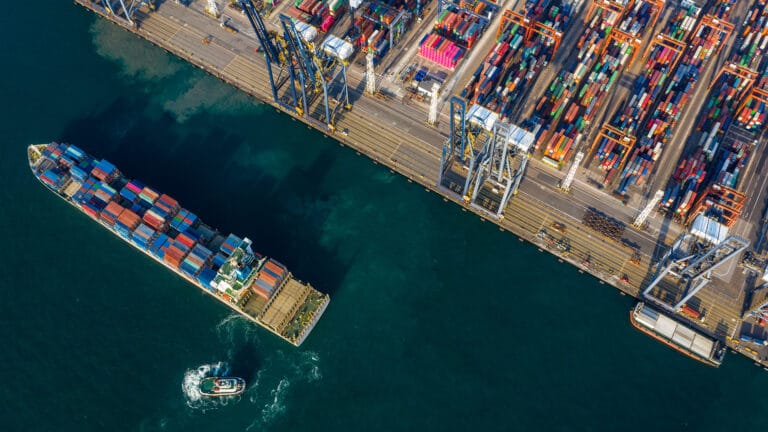
As digitalization and artificial intelligence (AI) accelerate, many ports around the world are phasing out slow, manual processes in favor of smart technology. These shifts have given rise to what we now call Smart Ports.
A Smart Port is a greener, fully digitalized version of the traditional port, built to improve communication across the logistics chain while protecting the marine environment through proper environmental management. These ports rely on real-time data that is constantly updated. With AI handling the automation of repetitive and resource-heavy tasks, port operations teams can spot issues before they escalate saving time and revenue in the process.
AI and automation are reshaping the maritime industry across the entire supply chain. Port operations can take full advantage of these technologies to become more accurate, more efficient, and easier to scale. Find out how maritime and logistics software solutions can do this for you.
Importance of Port Community System
A Port Community System (PCS) is a digital platform that centralizes the exchange of information between everyone involved in port operations cargo tracking, vessel schedules, customs data, and more.
The value of a PCS in port operations comes down to three things: efficiency, cost reduction, and better collaboration across stakeholders. By using a common platform for data sharing, a PCS eliminates redundant processes, streamlines communication, and reduces errors and delays. It also enables real-time monitoring and reporting, allowing port authorities to make informed decisions about resource allocation and risk management.
Frequently Asked Questions About Port Operations
Port operations are the maritime procedures that move vessels, cargo, and passengers through a terminal from arrival to departure. They cover logistics, navigation, cargo handling, documentation, security, and communication between vessels and port authorities.
A Smart Port is a digitalized and more sustainable version of a traditional port. It uses real-time data, IoT sensors, and artificial intelligence to automate operations, reduce emissions, and improve communication across the supply chain.
The three biggest challenges are capacity constraints (handling growing cargo volumes), digital transformation (investing in automation and training), and environmental compliance (reducing emissions and protecting marine ecosystems).